
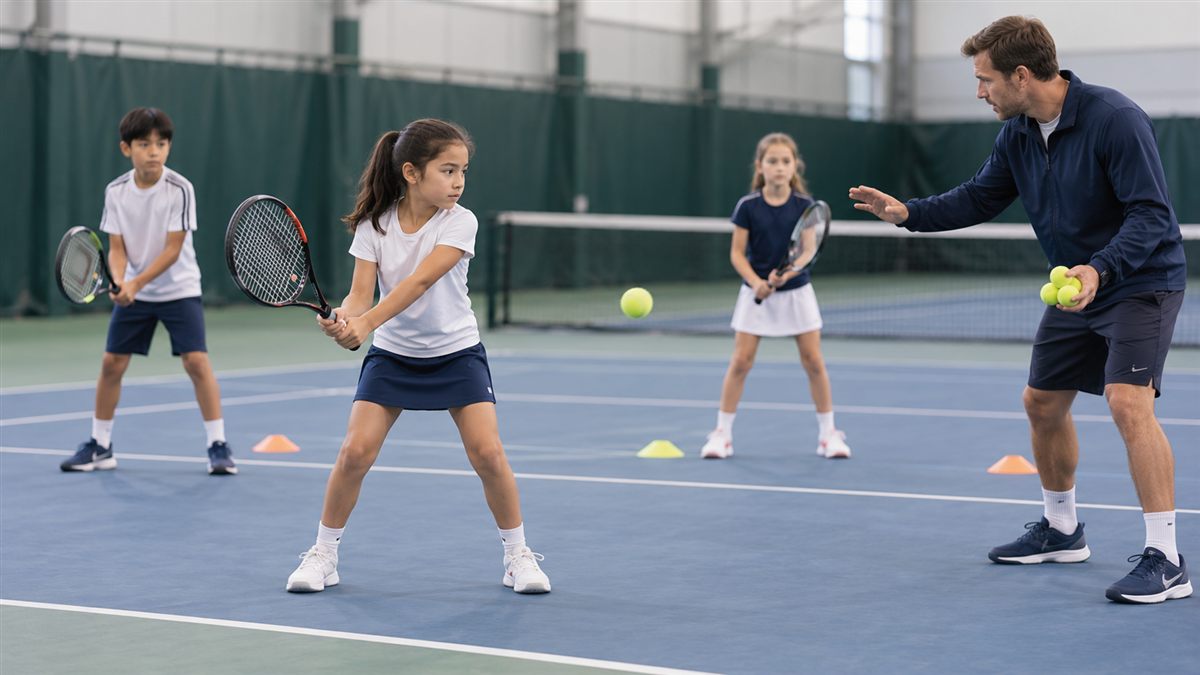
Concept image for editorial illustration; not a RAXION product photograph.
A school or junior program should evaluate a tennis simulator as an instructional environment, not just as a piece of equipment. Supervision, age-appropriate settings, space and safeguarding come first.
Define the educational objective
Decide whether the system would support basic coordination, racket contact, repeated movement or coach-led feedback. Keep sessions aligned with the learners’ age and experience. RAXION’s published Beginner and Pattern Training modes suggest possible exercises, but the program must be designed and approved by the teaching staff.
Assess safety and supervision
Ask how the practice area is separated from spectators, how ball delivery is stopped, how a teacher controls settings and how groups rotate safely. Check the venue’s own policies, local requirements and equipment documentation. Do not assume a mode name proves suitability for a particular age group.
Pilot before adopting
Run a supervised demonstration with educators, then document whether the system fits the lesson duration, staff ratio and learning objectives. The initial proposal should distinguish a confirmed current feature from a future or customized request.
Frequently asked questions
Is RAXION approved for every school setting?
No universal school approval is established by the public website; evaluate the actual site, age group and operating procedures.
Can students use it unsupervised?
The school should set supervision rules based on its assessment and the supplier’s current safety guidance.
Next step
Contact RAXION with the age group, room information and learning objectives for a tailored discussion.
Sources raxionofficial.co.kr/ | raxionofficial.co.kr/contact