
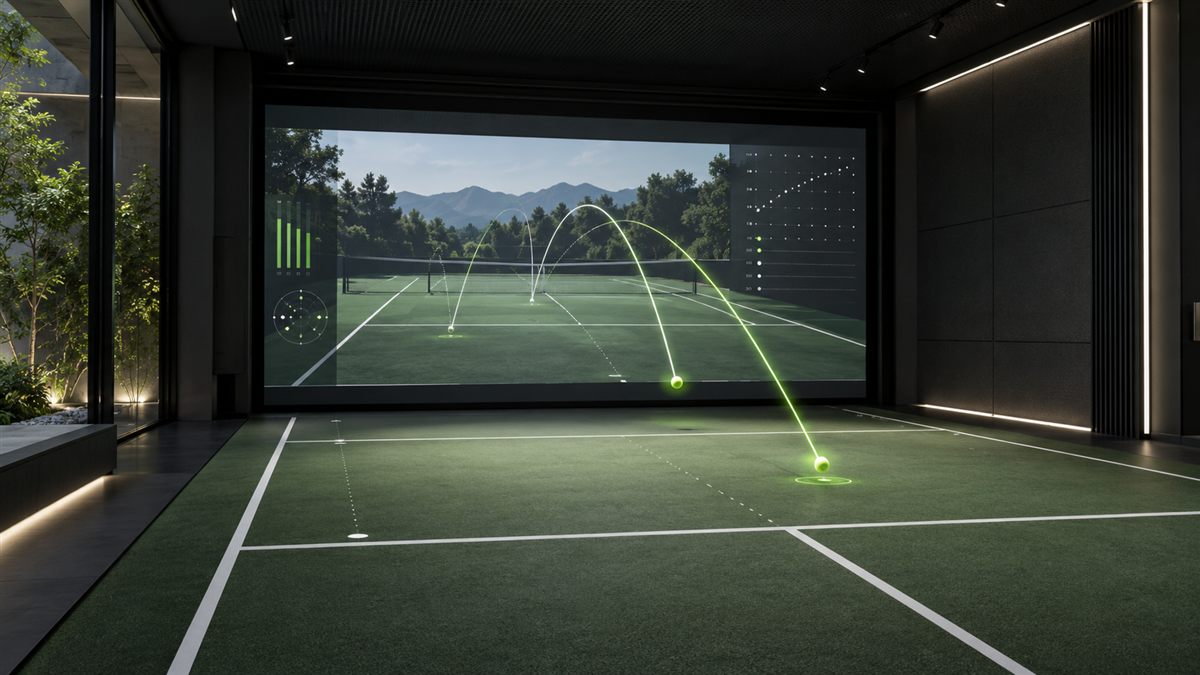
Concept image for editorial illustration; not a RAXION product photograph.
RAXION is an indoor tennis simulator developed by Joeun VnC. It combines structured practice modes with an on-screen training environment and a post-session result display. Its public product information describes Beginner Mode, Pattern Training Mode, and Rally Mode, along with measures such as speed, spin, and accuracy.
For a club or academy, the question is not simply whether a machine can feed balls. It is whether a repeatable exercise fits the program, space, staff workflow, and type of player the venue serves. RAXION should be evaluated in that operating context.
How the system works
The RAXION website describes an integrated setup built around a pitching bot, tracking sensors, and several training modes. Players can practice with programmed ball patterns, take part in rally-style exercises, and review session information on a results display. These elements give operators a way to offer structured indoor practice rather than an open-ended hitting session.
Three ways to structure a session
Beginner Mode is presented as an introduction to tennis fundamentals for new players. Pattern Training Mode is designed for customized, repeated ball patterns; the public description refers to control over speed and trajectory. Rally Mode simulates rally situations against an AI coach, including short, cross-court, and full-court rally formats.
These are different training purposes, not a ranking of customer value. A coach or operator chooses the format that matches the session goal. The separate mode guide explains each one in more detail.
What the result display shows
RAXION says its result display visualizes speed, spin, and accuracy after a session. The display can give a coach and player a starting point for discussion. It should be read alongside the drill conditions and what the player was trying to practice. A single number is not, by itself, evidence of lasting improvement.
Who should evaluate RAXION
Club owners, academy operators, and other indoor sports venue teams can use a demonstration to test whether the modes support their intended program. A productive review includes the person who will coach or supervise sessions, the person responsible for the facility, and whoever will manage customer bookings and support.
What to check before adopting RAXION
Before requesting a proposal, prepare a measured floor plan, photos of the room, a description of intended users, and an outline of the program. Ask for a live demonstration and a site-specific proposal. Confirm the equipment configuration, usable practice area, safety arrangements, electrical needs, training workflow, and post-installation support in writing. Installation requirements, configuration, local service arrangements, and commercial terms must be confirmed for the proposed site and country.
Frequently asked questions
Is RAXION only for experienced players?
No. The official site describes Beginner, Pattern Training, and Rally modes for different experience levels.
Does the website provide a universal room size?
The public overview does not establish a single suitable dimension for every site. Request a site assessment.
Is RAXION a replacement for a human tennis coach?
It is a training tool. A coach still chooses the goal, observes movement and safety, and interprets results for the player.
Does RAXION support padel or pickleball now?
The public site labels padel and pickleball as coming soon. Do not assume those sports are available in the current tennis configuration without direct confirmation.
Where can a venue buyer ask for a site-specific review?
Use the partner inquiry form and include the floor plan, location, and intended training program: raxionofficial.co.kr/contact.